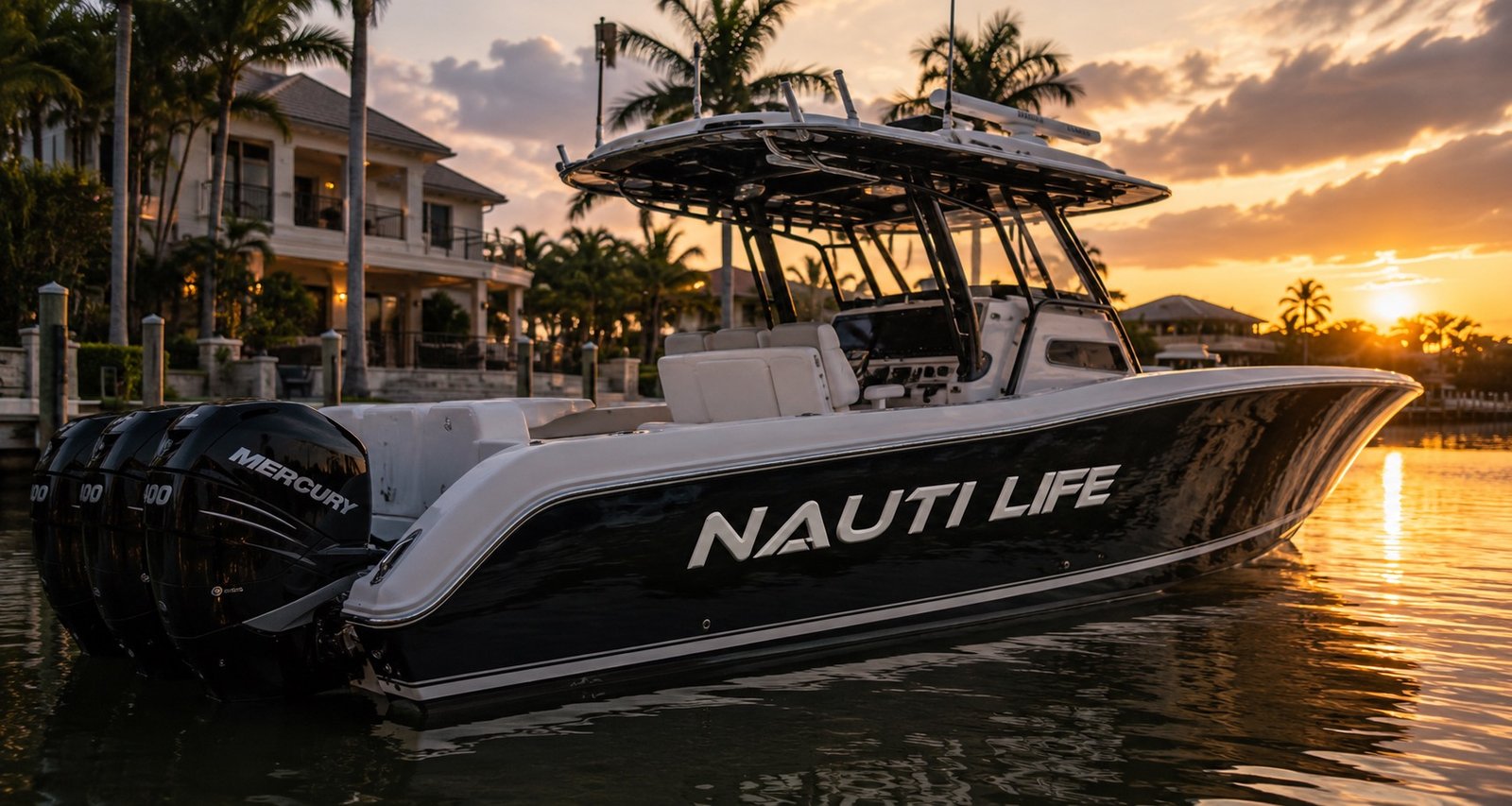
Vinyl lettering has its place, but it doesn’t create the same dimensional appearance as solid acrylic. Here’s what boat owners should consider before choosing.
A boat name is one of the first things people notice when they walk down the dock.
It might be displayed across the transom, along both sides of the hull or incorporated into a larger logo. Either way, the lettering becomes part of the boat’s identity—and the material you choose has a major effect on how that finished name looks.
Two of the most common options are vinyl lettering and solid 3D acrylic lettering.
Vinyl is widely available, affordable and useful for plenty of applications. Acrylic costs more, takes more work to produce and isn’t the right choice for every design or mounting surface.
But when somebody wants their boat name to look like a real part of the vessel instead of something applied on top of it, dimensional acrylic is in a different class.
Here’s the honest difference.
What Is Vinyl Boat Lettering?
Vinyl boat lettering is made by cutting lettering or graphics from a thin adhesive vinyl film. Printed vinyl can also reproduce detailed artwork, gradients, shadows and complex multicolor graphics.
There are good reasons vinyl is common:
- It is generally less expensive than solid acrylic
- It works well for registration numbers and smaller lettering
- It can conform to mildly curved surfaces
- It supports detailed printed graphics and gradients
- It is relatively lightweight
- It can be replaced without manufacturing solid letters
Quality vinyl installed correctly can look clean and professional. We’re not going to pretend otherwise just because FORG3D specializes in acrylic.
The limitation is that vinyl remains a thin surface-applied material. It can add color and graphics, but it doesn’t create the physical depth, shadows or raised appearance of solid lettering.
What Is 3D Acrylic Boat Lettering?
3D acrylic boat lettering is cut from solid acrylic material rather than thin vinyl film.
The individual letters, numbers and logo elements have actual thickness. Once installed, that depth creates natural shadows and makes the design look more like a factory emblem or dimensional sign.
Depending on the design, acrylic lettering can be used for:
- Boat names
- Custom logos
- Hailing ports
- Registration numbers
- Replacement manufacturer-style lettering
- Matching port and starboard lettering
- Transom names and graphics
FORG3D designs each project around the available mounting area, the requested style and the limitations of the material. We can produce clean text, custom lettering and many logo designs in gloss, brushed metallic-look and other acrylic finishes.
This is real solid acrylic—no printed vinyl sticker pretending to be a dimensional emblem.
The Biggest Difference Is Depth
The easiest way to understand the difference is to look at the lettering from an angle.
Vinyl sits nearly flush against the surface. From straight ahead it may look great, but from the side there is very little physical dimension.
Acrylic creates a raised profile. Light hits the face and edges differently, while the thickness produces a visible shadow against the hull or transom.
That shadow changes throughout the day as the boat moves and the lighting changes. It gives the name more visual weight without needing an oversized design.
That is the main reason boat owners choose acrylic. They aren’t simply buying letters—they’re upgrading the appearance of the boat.
Acrylic Isn’t Automatically Better for Every Project
We make acrylic lettering, but we’ll still be honest about where it makes sense.
Acrylic works best when:
- The mounting area is reasonably smooth
- The design has enough material to remain strong
- The customer wants a raised, dimensional appearance
- The lettering can be installed without crossing sharp body lines
- The design doesn’t depend on photographic gradients or extremely fine printed detail
Vinyl may be the better option when:
- The mounting surface has significant compound curves
- The design includes very small or delicate details
- The customer needs a large printed graphic or color gradient
- The budget is the main concern
- The lettering is temporary
- Minimal thickness is preferred
Some designs also need to be adjusted before they can be produced in acrylic. Extremely thin script connections, tiny isolated details and narrow points may look good on a screen but become too fragile when cut as solid pieces.
Part of the design process is making sure the artwork will still look right after it becomes a physical product.
A Boat Name Has to Fit the Boat
Choosing a font is only part of the job.
Good boat lettering should work with the shape and style of the vessel. A heavy block design may look right on an offshore center console but feel completely out of place on a classic cruiser. A thin script may look elegant on a screen but disappear visually once it is installed across a wide transom.
We consider:
- Available width and height
- Hull or transom shape
- Body lines and hardware
- Swim platforms, hatches and doors
- Existing colors and finishes
- Viewing distance
- Letter spacing
- Whether the design will be installed once or as a matching pair
The goal is to make the finished lettering look intentional—not like a generic name stretched until it fits.
Accurate Measurements Matter
Before starting a custom boat-lettering project, we need the usable width and height of the intended mounting area.
The overall available space is more important than estimating the height of one letter. The final design may include capital letters, lower-case letters, a logo, a hailing port or other elements that change its proportions.
When measuring:
- Measure the actual usable flat or reasonably smooth area.
- Leave room around hatches, handles, lights, trim and body lines.
- Measure both sides if ordering a port-and-starboard pair.
- Don’t assume both sides of the boat have identical clearances.
- Provide straight-on photographs of the installation area whenever possible.
We would rather adjust the design before production than have a customer discover that a letter crosses a hatch or lands directly on a body line.
Installation Should Be Precise, Not Stressful
Loose individual letters can be difficult to position by eye. A small difference in spacing or angle may not be obvious while installing them one at a time, but it becomes noticeable when you step back.
That is why FORG3D boat-lettering orders include an installation template or stencil appropriate for the design. It keeps the letters aligned and maintains the intended spacing while the customer positions the complete layout.
The general process includes:
- Confirming the intended location
- Thoroughly cleaning and preparing the surface
- Positioning and leveling the supplied template
- Dry-checking the complete layout
- Following the supplied installation instructions
- Applying each piece without changing its spacing or alignment
Customers should always review the instructions supplied with their specific project. Surface shape, material and design complexity can affect installation.
Professional installation is also available for qualifying projects in Southwest Florida, while completed lettering can be shipped nationwide for customer installation.
What Does Custom Acrylic Boat Lettering Cost?
There isn’t one honest price for every custom boat name.
Pricing depends on factors such as:
- Overall finished dimensions
- Number of letters and separate pieces
- Material thickness and finish
- Design complexity
- Logos or custom artwork
- One transom layout versus a matching side pair
- Installation requirements
- Whether special material must be ordered
A short, clean boat name made from a standard material will require less design and production time than a large pair of custom logos containing numerous pieces.
That’s why FORG3D reviews the project details before providing an estimate. We want the price to reflect what is actually being made instead of advertising a low number that has nothing to do with the finished project.
How Long Does Production Take?
Typical production time is 1–2 business days when the required materials are in stock.
If a specific color, finish or material must be ordered, customers should allow an additional 3–5 business days for it to arrive before production begins.
Design time, customer communication and shipping are separate from production time. More complex artwork may require additional preparation before it is ready for the laser.
We would rather take the time to make the design production-ready than rush bad artwork into an expensive piece of acrylic.
So, Which One Should You Choose?
Choose vinyl when you want:
- A lower-cost option
- A temporary name or graphic
- Printed gradients or highly detailed artwork
- Lettering for a significantly curved surface
- Thin registration or informational lettering
Choose 3D acrylic when you want:
- A raised, dimensional appearance
- Real physical depth and natural shadows
- A factory-emblem or premium-sign look
- Custom lettering designed around the boat
- A finish that visually stands apart from ordinary flat graphics
Neither material is automatically right for every application.
But if your goal is to give the boat a name that looks like it belongs there—not something that was simply stuck onto it—solid acrylic is hard to beat.
Ready to Give Your Boat a Name That Stands Out?
FORG3D designs and manufactures custom 3D acrylic boat names, lettering, logos, hailing ports and registration numbers for customers throughout the United States.
We ship nationwide and offer installation for qualifying projects in Southwest Florida.
To get started, send us:
- The wording or boat name
- Approximate available width and height
- Photographs of the intended mounting area
- Preferred colors or finishes
- Any logo, artwork or style references
- Whether you need one layout or a matching pair
We’ll review the project and help determine whether acrylic is the right choice for the design.
Your boat already has a personality. Its name should look like it belongs there.